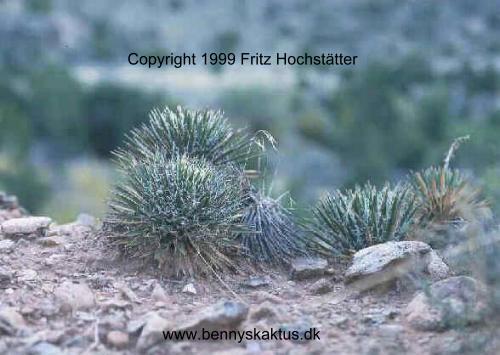
Yucca nana Hochstätter, in habitat.
Photo by Fritz Hochstätter ©1998.
In 1998 did Fritz Hochstätter describe a new species in the genus Yucca, the species Yucca nana (Succulenta 77 (2):72, 1998). The first time this plant occur in the literature is in 1985, in an article by Robert Haenni, in the American Cactus society's journal. Robert Haenni (Denver Colorado) and his friend Allan Taylor (Colorado) was in January 1985 on a plant trip to the Northern part of Arizona and in adjacent Nevada and Utah. In the southern Utah south of Moab, they discovered their first real find, a dwarf form from the genus Yucca, the largest rosettes wasn't more than 45 cm across and only 10 to 15 cm tall. A few of the oldest plants where clumps of plants which was almost 100 cm across. This species was not given a name until 13 years later, when Fritz Hochstätter in the mean time had found the plants on one of his many "hunting trips" for Pediocactus and Sclerocactus. As usually did Fritz Hochstätter published this "new" species in the Dutch journal Succulenta.
In the following I will try to summarize the most important facts on the species, and my own (although very short) experience with this species.
Yucca nana Hochstätter
DWARF YUCCA.
Synonyms:
Yucca sp. Rod Haenni, Cactus & Succulent journal (US) 57:170,
fig. 2 (1985), south of Moab Utah.
Type location:
Southern Utah, in 2.075 m. (type specimen fh 1178.78 is deposit at
SRP (Herbario Boise, Idaho, USA)), there are not given an exact location,
this is done to protect the species for massive collection, so the species
is protected against extinction, while there aren't many plants at the
type location. (Fritz Hochstätter do though have had seeds from the
type location, on his seed list since 1998!!)
Distribution and growing conditions:
Yucca nana is endemic to Great Basin Desert, in southern Utah in 1600 - 2075 m. They grow on gravely and sandy slopes in open pine woods, in the what is called Sagebrush vegetation. The Sagebrush vegetation area, is dominated by the Genus's Artemisia and Atriplex, and here Yucca nana grows together with Sclerocactus parviflorus, Echinocereus and Opuntia species. The distribution of Yucca nana is apparently very bounded, and most of the plants grows in Glen Canyon, at this location and in the nearby area, Fritz Hochstätter will make more expeditions, to map the further distribution of this nice little dwarf species.
Description of the species:
Rosettes: is solitary or clustering, up to 65 (occasionally 80) cm across. It makes plantlets, doesn't have a stem. Roots: rhizome system that's growing laterally. Leaves: Stiff and erect, up to 20 cm long, convex (bending outwards), dark green, smooth, with many fibers at the edge of the leaves, leaves is a little less wide at the start. Brownish spine at the leaf tip, at the basis less than 1 cm wide. Flower racemen: normally upright, succulent, more than 100 cm tall, not branched. 1 to 3 flowers on each branchlet, normally 20 branchlet on each racemen. Flowers: is bell shaped, white, outer petals are 3 - 4 cm long, 1,5 -2,5 cm wide, inner petals are 2,8 - 3,5 cm long, 1,8 - 2,8 cm wide. Style: cream, 1 cm long. Anther: white, cream or almost greenish. Stamen: greenish 0,5 cm. Ovary: greenish 1,5 cm long and 0,5 cm across. Ovary superior 6 (occasionally 8) cream to greenish. Fruit: Globose to Ovoid, is green when in growth, but when the seeds is ripe it's woody and splits open, Yucca nana belong to the "dehiscent fruited species" in the section CHAENOCARPA , the fruit is 3 - 4 cm long, 2 - 3 cm across, the ripe woody fruit is 4 - 5 cm when it's split open, and 2 - 2,5 cm when it's not open. Seeds: black, flat, has a rugged surface that's a little hemispherical, they can be variable in shape and are from 0,4 to 0,9 cm long and wide, the seeds remains viable for years. Flowering time in habitat: from the end of april to June.
Related species:
Yucca harrimaniae
Yucca harrimaniae ssp. gilbertiana
Yucca harrimaniae ssp.
neomexicana
Yucca harrimaniae ssp. sterilis
The closest relative is Yucca harrimaniae which grows rather near Yucca nana, but differs by having longer leaves (more than 20 cm), and the flower racemen is shorter (less than 100 cm). Yucca nana has flowers that are pure white, while they are off-white to cream or even brownish in Yucca harrimaniae.
Hybrids:
The second specimen of Yucca nana in bloom in Europe, were at
the collection of Martin Tversted, Grenaa, Denmark in 2010. Martin Tversted
were unfortunately not able to pollinate his Yucca nana, but were
able to pollinate a Yucca flaccida with pollen from his Yucca
nana. At the time of writing (September 2010) the fruit were not ripe
yet, but still hanging on to the plant.
Yucca flaccida (Blue Ridge Parkway, Virginia) x nana (Mill Creek area, UT), Made by Martin Tversted, Grenaa, Denmark in 2010. Seeds not ripe yet.
In Utah there are intermediate specimens of Yucca harrrimaniae and Yucca nana.
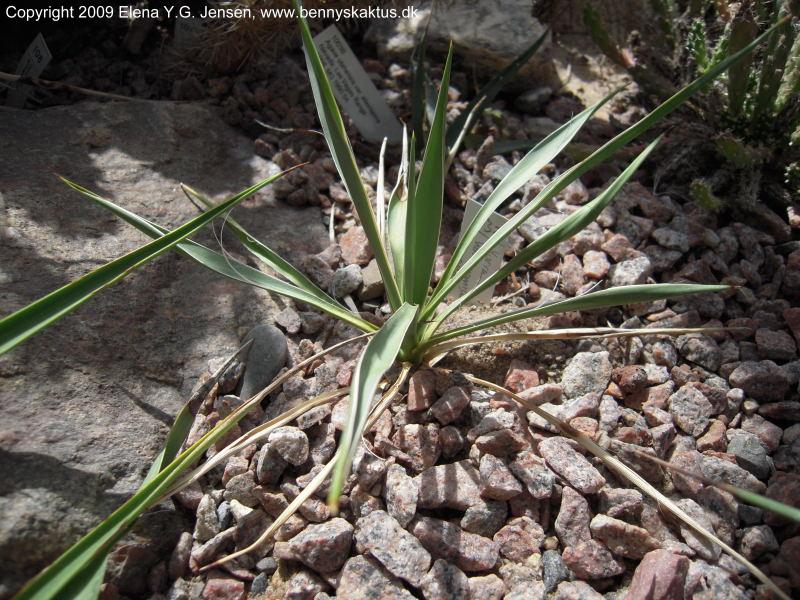
Yucca harrimaniae x nana (BMJ#1532),
Southeren Utah, 2000m. fh1180.31, sown 2004.
Copyright © 2009 Elena Y.G. Jensen
Hardiness:
Since the species is growing at an altitude from 1600 to 2000 m., Those
which are planted inside my unheated greenhouse are doing very well, In
the summer of 2000 planted the first seedlings in the unheated greenhouse,
and in 2001 the first seedlings were so large, that I dared try it in my
protected bed in the garden. Both plants er still OK in Oct. 2010, see
photo further below. In the spring of 2008 I did plant a large plant close
up agains the south facing wall of the house, it have grown well since
(Oct. 2010). It will be interesting to see how well it looks in the spring
of 2011.
If Yucca nana proofs to be reliable hardy in Denmark, it will be a plant that's everyone who is growing alpines or hardy cactus wants in their garden! I the next 5 years or so, I hope to be able to make seeds of my own plants, so it wont be necessary to collect seeds in the nature, You must remember that "Propagation is Conservation". It will be obvious, to use this nice dwarf to make other dwarf hybrids, so the selection of dwarf Yuccas will be even larger, I would expect that a hybrid with Yucca flaccida or Yucca filamentosa would be the first I would try to make.
My own experience with Yucca nana:
This species is rather new in cultivation, I have not had the possibility
to make many growing experiment with this little rare dwarf Yucca.
One specimen were planted outside close to a south facing wall in 2008
and it is still OK at the time of writing (Oct. 2010). I have tried planting
some in a bed which is protected against winter moisture from mid Oct.
to early April, most of the plants are alive, but they don't grow much
from year to year.
I think that I have sown seeds from all known locations:
893 Yucca nana, Utah, Mill Creek area, fh 1178.77, sown 1998
and more in 1999.
893A Yucca nana, Utah, Mill Creek area, fh1178.77, s1998
893B Yucca nana, Utah, Mill Creek area, fh1178.77, s1998
893C Yucca nana, Utah, Mill Creek area, fh1178.77, s1998
894 Yucca nana, Utah, Type Location, South Utah, 2075 m., fh1178.11,
s1998
894B Yucca nana, Utah, Type Location, South Utah, 2075 m., fh1178.11,
s1998. Planted inside the unheated greenhouse.
1065 Yucca nana, Utah, Mill Creek area, fh1178.77, s1999
1066 Yucca nana, Utah, Type Location, South Utah, 2075 m., fh1178.11,
s1999, planted inside the unheated greenhouse.
1066 Yucca nana, Utah, Type Location, South Utah, 2075 m.,
fh1178.11, s1999, planted in an unprotected bed on the terrasse.
1067A Yucca nana, Utah, Muddy Creek, 2110 m., fh1179.39, s1999
1067B Yucca nana, Utah, Muddy Creek, 2110 m., fh1179.39, s1999
1067C Yucca nana, Utah, Muddy Creek, 2110 m., fh1179.39, s1999
1067D Yucca nana, Utah, Muddy Creek, 2110 m., fh1179.39, s1999,
planted in an unprotected bed on the terrasse.
1067E Yucca nana, Utah, Muddy Creek, 2110 m., fh1179.39, s1999
1068 Yucca nana, Utah, Limestone Cliffs, 2040 m., fh1179.52,
s1999
1069 Yucca nana, Utah, Sinbad Co., 2000 m., fh1179.53, s1999
1339A Yucca nana, Utah, Mill Creek area, fh1178.77, s2000. I
have two plants of this clone, one is grown inside the unheated greenhouse
all year, and another is growing outside all year without any protection.
1339B Yucca nana, Utah, Mill Creek area, fh1178.77, s2000. Growing
in a protected bed outside.
1340 Yucca nana, Utah, Type Location, South Utah, 2075 m., fh1178.11,
s2000
1341 Yucca nana, Utah, Muddy Creek, 2110 m., fh1179.39, s2000
1344 Yucca nana, Utah, Limestone Cliffs, 2040 m. fh1179.52,
s2000
1345 Yucca nana, Utah, Sinbad Co., 2000 m., fh1179.53, s2000
1345A Yucca nana, Utah, Sinbad Co., 2000 m., fh1179.53, s2000
1345B Yucca nana, Utah, Sinbad Co., 2000 m., fh1179.53, s2000
1345B Yucca nana, Utah, Sinbad Co., 2000 m., fh1179.53, s2000,
, planted in an unprotected bed on the terrasse.
1353 Yucca nana, Utah, 1800 m., fh1180.92, s2000, miniature
form, recieved as aff. nana
1354 Yucca nana, Utah, 2000 m., fh1180.93, s2000, miniature
form, recieved as aff. nana
1355 Yucca nana, Utah, 1600 m., fh1180.94, s2000, miniature
form, recieved as aff. nana
1406 Yucca aff. nana, Utah, East of Capitol Reef National
Park on Notam Road, s2000, Robert Pitman, This one could be a hybrid of
Yucca
harrimaniae x Yucca nana?
1527 Yucca nana, Utah, Mill Creek, fh1178.77, s2004
1528 Yucca nana, Utah, Type Location, 2075 m., Southern Utah,
fh1178.78, s2004
1529 Yucca nana, Utah, Muddy Creek, fh1178.39, s2004
1530 Yucca nana, Utah, Limestone Cliffs, 2040 m., fh1179.52,
s2004
1531 Yucca nana, Utah, Sinbad Co., 2000 m., fh1179.53, s2004
1739 Yucca nana?, s2002 Körehes.
2327 Yucca aff. nana, Utah, 1800 m., fh1180.92, s2011
2328 Yucca aff. nana, Utah, 1600 m., fh1180.94, s2011
2329 Yucca aff. nana, Utah, 2250 m., fh1184.44, s2011
2330 Yucca nana complex, Utah, fh1186.64, s2011
2331 Yucca nana complex, Utah, fh1186.65, s2011
2332 Yucca nana, Utah, 2050 m., fh1187.54, s2011
2334 Yucca sp. aff. nana, Utah, fh1186.67, s2011r
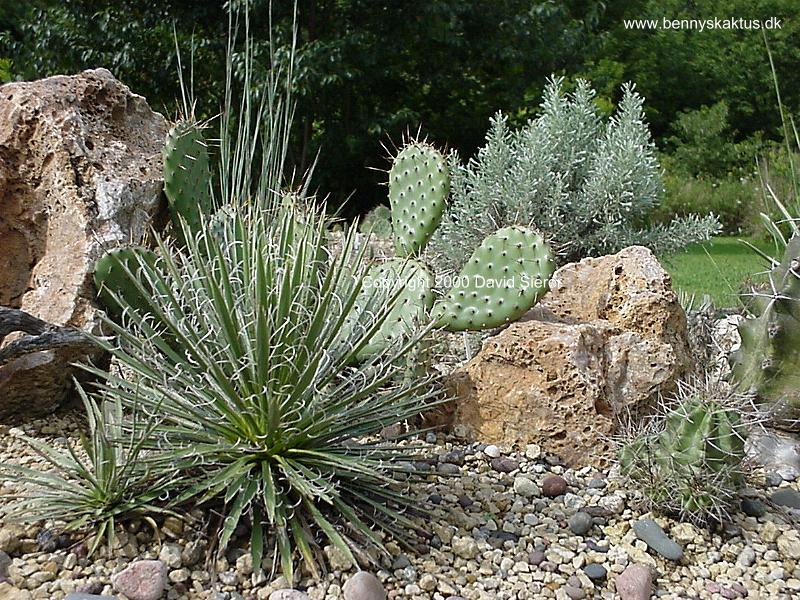
A friend of mine in Wisconsin have had good success with Yucca nana,
all he does in the winter is to place a bucket on top of the plant and
that's enough to get the plant safely through the winter.
 |
 |
||
| Yucca nana In David Sierer's garden
in Wisconsin.
Copyright ©2000 David Sierer. |
Yucca nana In David Sierer's garden
in Wisconsin.
Copyright ©2000 David Sierer. |
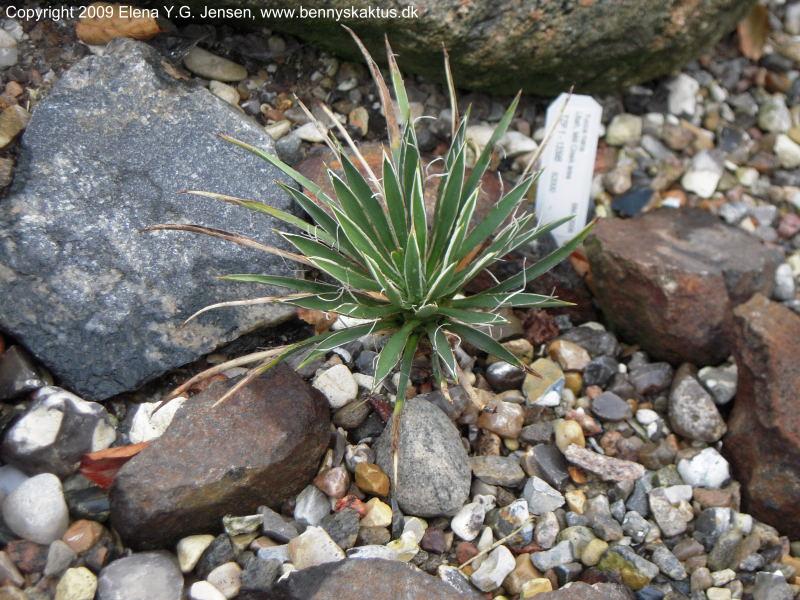
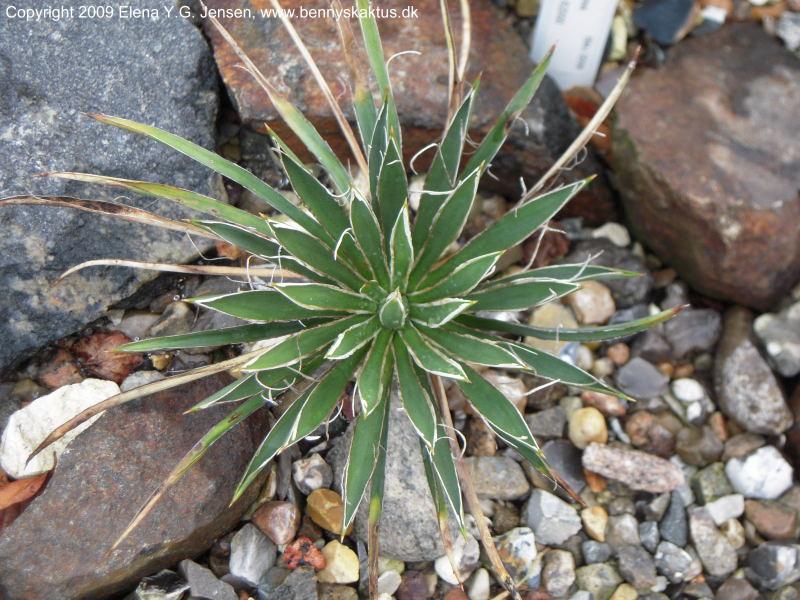
Yucca nana, Utah, Mill Creek area, fh1178.77, s2000. growing the collection of Lars Bo Kjeldstrøm, Denmark. BMJ #1339B, TZP #1. | |
 |
 |
 |
 |
| Yucca nana, Utah, Mill Creek area, fh1178.77, s2000. growing the collection of Lars Bo Kjeldstrøm-Fisker, Denmark. BMJ #1339B, TZP #1. Photo from September 20th. 2009. | Yucca nana, Utah, Mill Creek area, fh1178.77, s2000. growing the collection of Lars Bo Kjeldstrøm-Fisker, Denmark. BMJ #1339B, TZP #1. Photo from September 20th. 2009. | Yucca nana, Utah, Mill Creek area, fh1178.77, s2000. growing the collection of Lars Bo Kjeldstrøm-Fisker, Denmark. BMJ #1339B, TZP #1. Photo from September 11th. 2010. | Yucca nana, Utah, Mill Creek area, fh1178.77, s2000. growing the collection of Lars Bo Kjeldstrøm-Fisker, Denmark. BMJ #1339B, TZP #1. Photo from September 11th. 2010. |
Pictures of my own specimens of Yucca nana:
 |
 |
 |
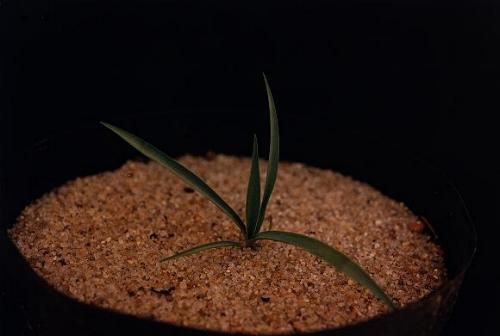 |
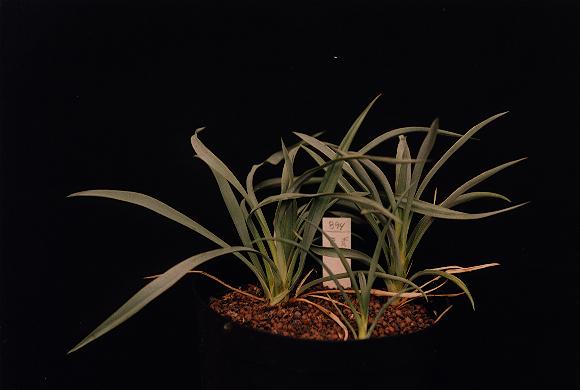
| #894 Yucca nana Type location, 2075 m., southern Utah, fh 1178.78,
sown May 1998.
Photo from October 1999. ©1999 Benny M. Jensen . |
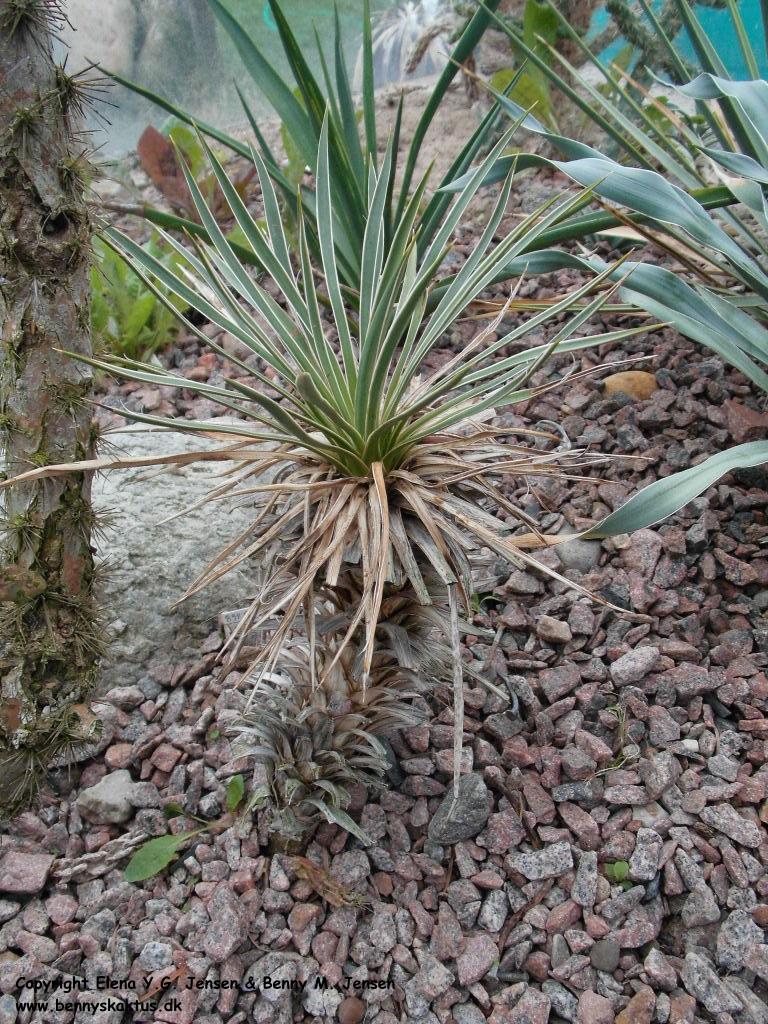
#894B Yucca nana Type location, 2075 m., southern Utah, fh 1178.78,
sown May 1998.
Photo from September 1st. 2013 Copyright © 2013 Elena Y.G. & Benny M. Jensen |
#1067 Yucca nana Utah Muddy Creek, 2110 m., fh 1179.39, sown
June 1999.
Photo from October 1999. ©1999 Benny M. Jensen. |
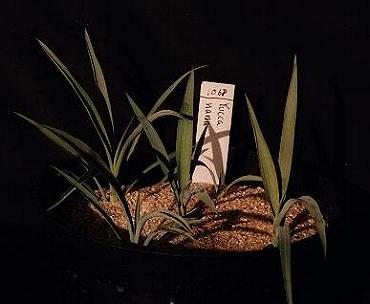
#1068 Yucca nana Limestone Cliffs, Utah, 2040 m. fh 1179.52,
sown June 1999.
Photo from October 1999. ©1999 Benny M. Jensen |
 |
 |
 |
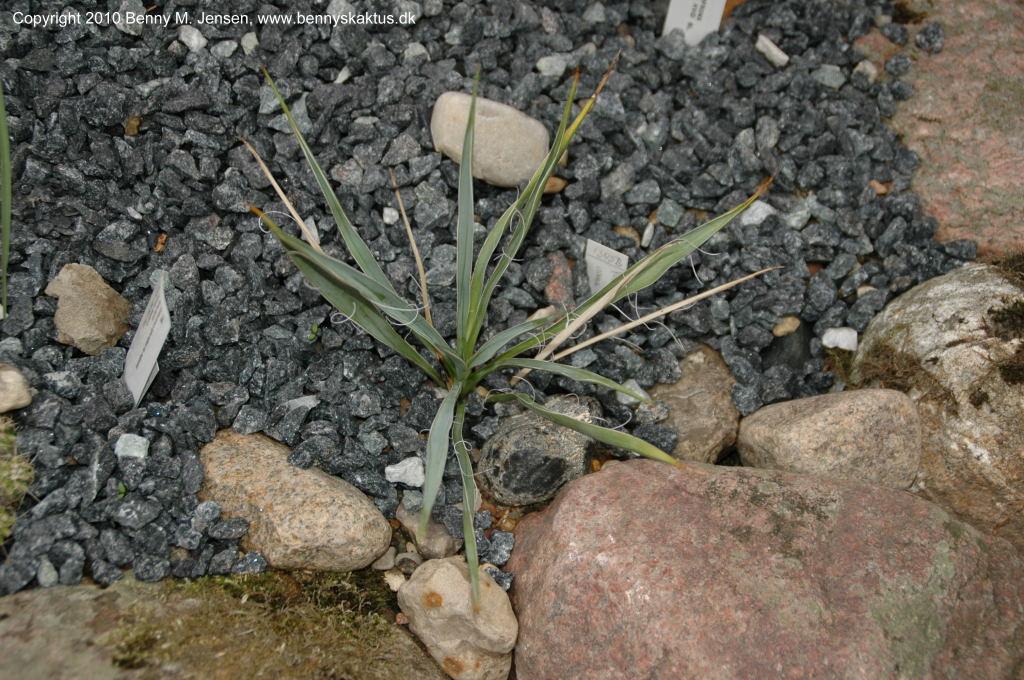 |
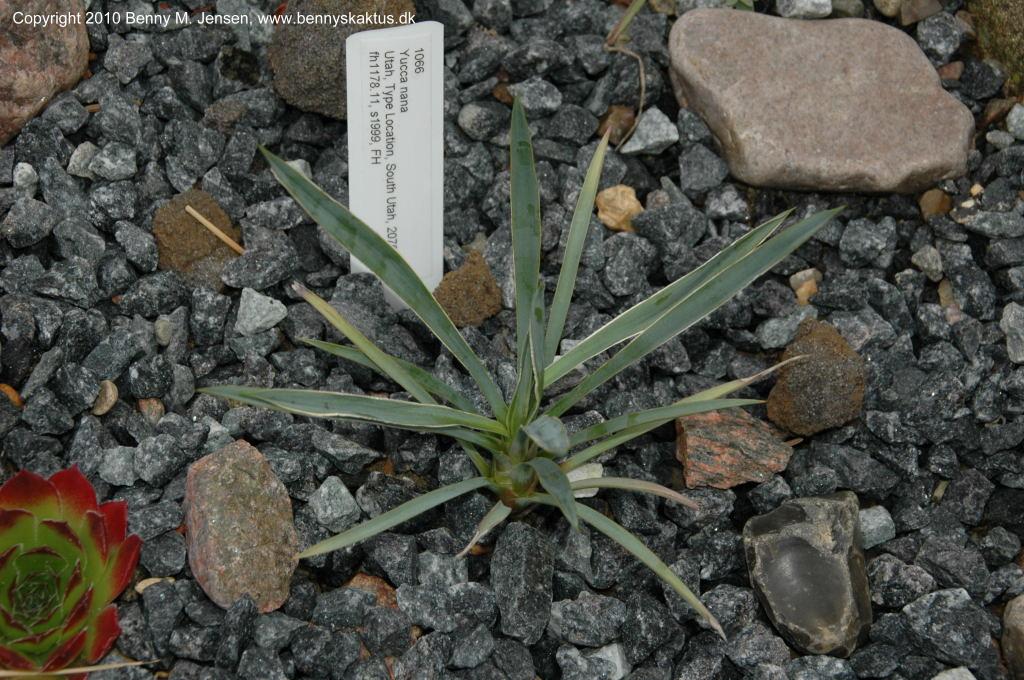
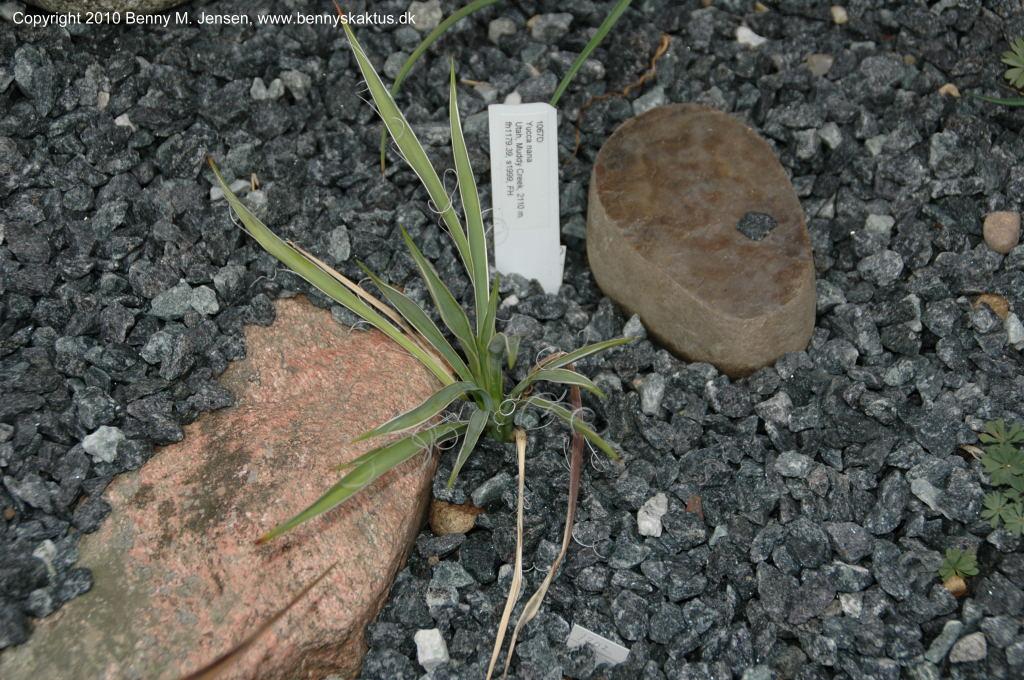
| #1066 Yucca nana, Type Location, South Utah, 2075 m., fh1178.11 sown 1999. Planted in a unprotected bed May 2010. Photo from August 6th. 2010. | #1067D Yucca nana Utah Muddy Creek, 2110 m., fh 1179.39, sown June 1999. Planted in a unprotected bed May 2010. Photo from August 6th. 2010. | #1069 Yucca nana, Sinbad Co. Utah, 2000 m., fh 1179.53, sown 1999. Planted in a unprotected bed May 2010. Photo from August 6th. 2010. | 1345B Yucca nana, Utah, Sinbad Co., 2000 m. fh1179.53, s2000. Planted in a unprotected bed May 2010. Photo from August 6th. 2010. |
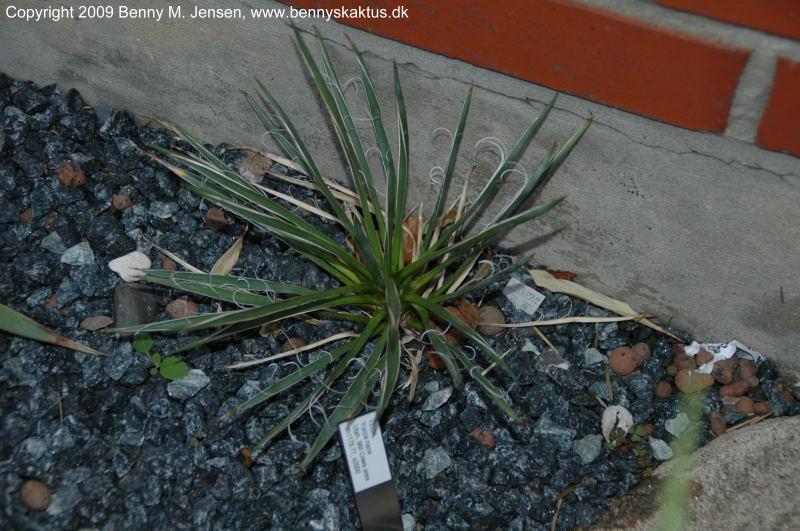 |
 |
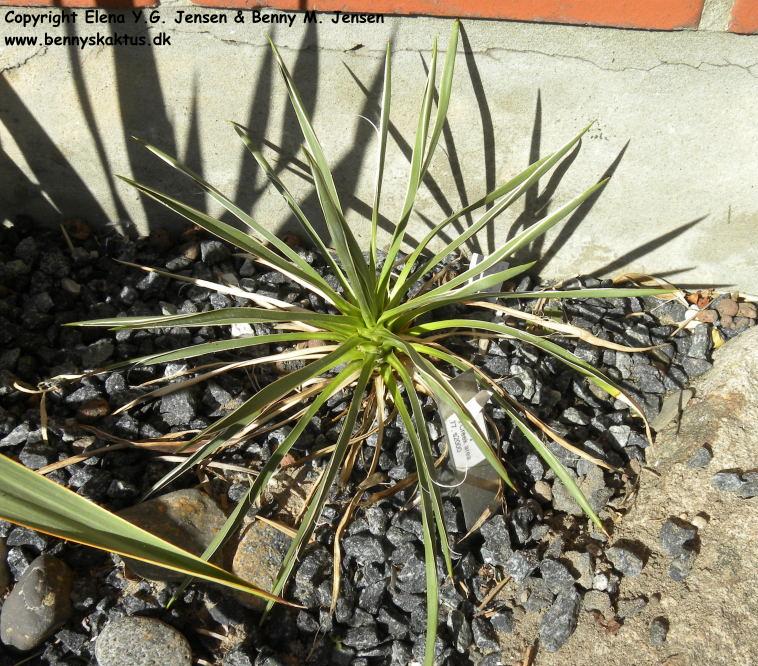 |
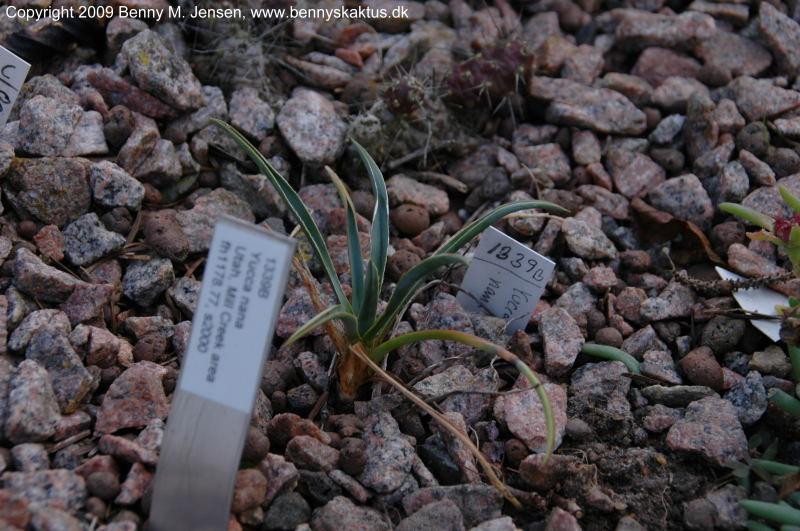 |
| 1339A Yucca nana, Utah, Mill Creek area, fh1178.77, s2000. This
plant is grown outside in an unprotected bed. Photo from November 8th.
2009.
|
1339A Yucca nana, Utah, Mill Creek area, fh1178.77, s2000. This
plant is grown outside in an unprotected bed. Photo from November 8th.
2009.
|
1339A Yucca nana, Utah, Mill Creek area, fh1178.77, s2000. This
plant is grown outside in an unprotected bed. Photo from September 4th,
2013.
Copyright © 2013 Elena Y.G. & Benny M. Jensen |
1339B Yucca nana, Utah, Mill Creek area, fh1178.77, s2000. Grown
in a protected bed. Photo from October 1st. 2009.
|
 |
|||
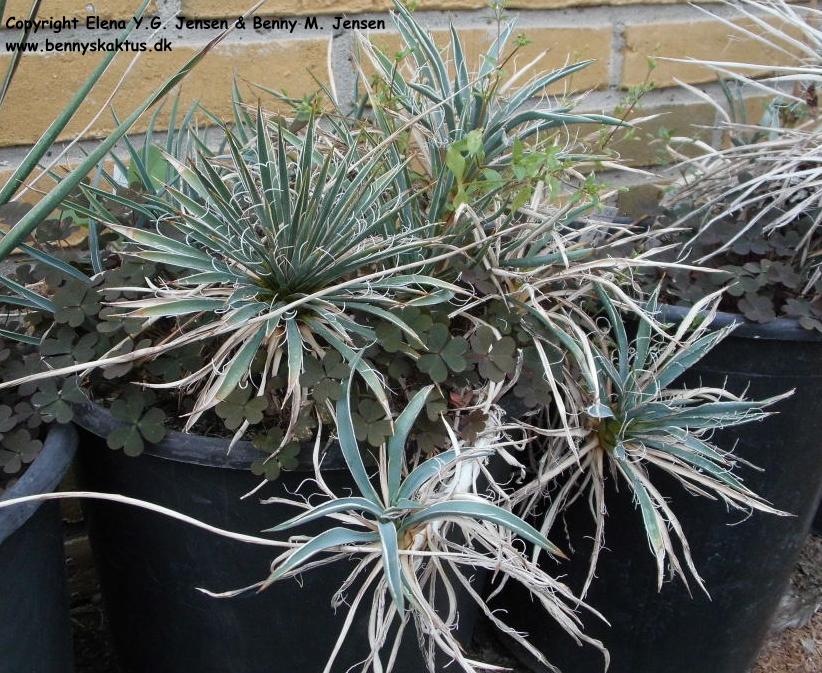
| 1065 Yucca nana, Utah, Mill Creek area, fh1178.77, s2000. a
10 liter pot full of 13 year old Yucca nana's.
Copyright © 2013 Elena Y.G. & Benny M. Jensen. |
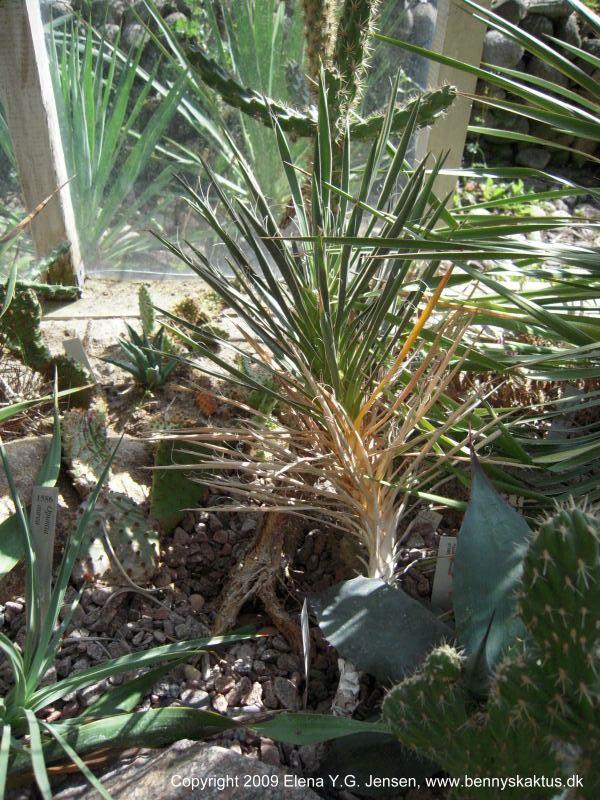
#893B Yucca nana, Mill Creek area, Utah, fh 1178.77, sown May 22nd. 1998. Planted in a bed inside the unheated greenhouse.
 |
 |
 |
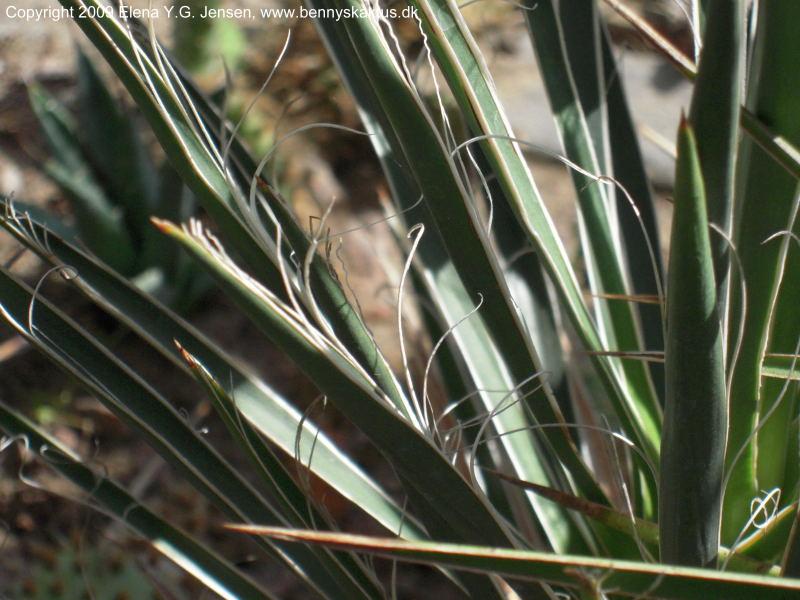 |
| July 24th. 2009. © Benny M. Jensen | July 28th. 2009. © Elena Y.G. Jensen | July 28th. 2009. © Elena Y.G. Jensen | July 28th. 2009. © Elena Y.G. Jensen |
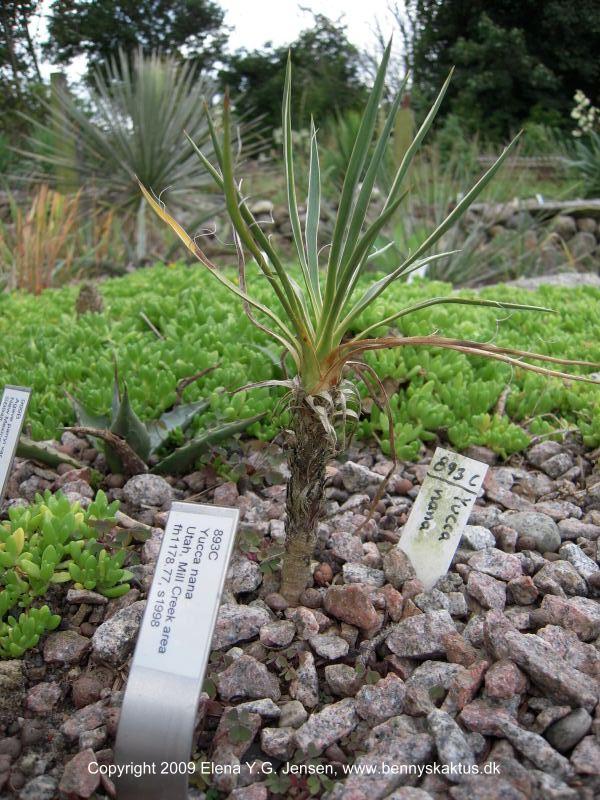
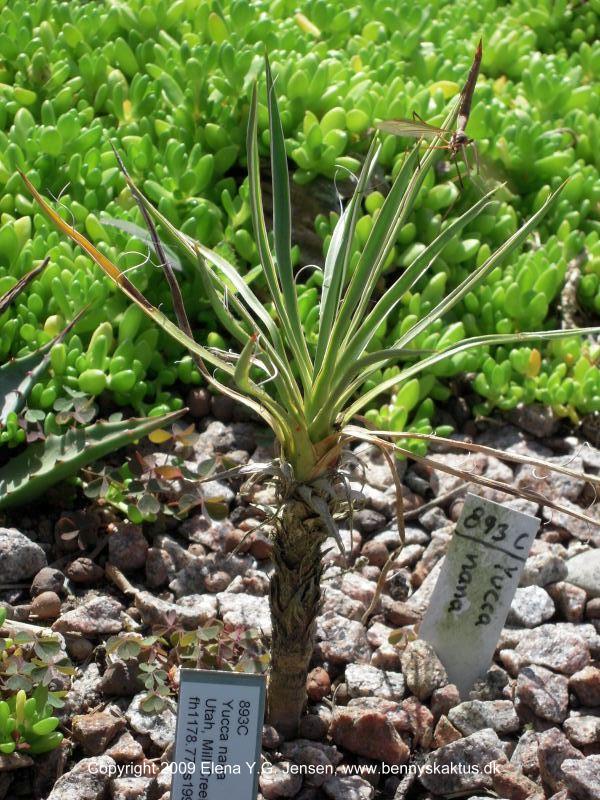
#893C Yucca nana, Mill Creek area, Utah, fh 1178.77, sown May 22nd. 1998. Planted in a bed which is protected against moisture from mid October to April.
 |
 |
 |
 |
| June 2003. © Benny M. Jensen 2003. | August 13th. 2009. © Elena Y.G. Jensen | August 16th. 2009. © Elena Y.G. Jensen | August 16th. 2009. © Elena Y.G. Jensen |
Reference:
HAENNI, R, (1985), Cact. & Succ. Jour. Amer. Vol. 57 (4): 170-172.
(Yucca sp.)
HOCHSTAETTER, F., (1998) Succulenta 77 (2):72. (Yucca nana)
HOCHSTAETTER, F., (1998) Kaktusbluete :29. (Yucca nana)
HOCHSTAETTER, F., (1999) Yucca (Agavaceae), CD-Rom nr. 3.
HOCHSTAETTER, F; (2000), YUCCA (vol. I): 38 (Yucca nana)
MCKELVEY, S., Yucca of the south-western USA 2: (1947)
MOELLER JENSEN, B., Kaktus og andre sukkulenter 35(1):13-15 (January,
2000) (Yucca nana Hochstätter)
NEESE & WELSH, Great Basin Naturalist 45 (4): 789-790 (1985) (Yucca
harrimaniae var. sterilis)
REVEAL, Intermountain Flora 6: 530 (1977) (Yucca
harrimaniae var. neomexicana)
RYDBERG, Fl. Rocky Mts. 1061. 1917(1918) (Yucca
gilbertiana)
TRELEASE, Ann. Rept. Missouri Bot. Gard. 13: 59 (1902) (Yucca
harrimaniae)
TRELEASE, Annual Rep. Missouri Bot.Gard.18: 225, 1907. (Yucca
harrimaniae var. gilbertiana)
WOOTON & STANDLEY, Contrib. U. S. Nat. Herb. 16: 115 (1913) (Yucca
neomexicana)
WEBBER, J.M., Yuccas of the South West, in Agriculture Monograph U.S.D.A.
17: 1953)
Navajo Country:
Home page:
Email: Fhnavajo@aol.com
Owner: Fritz Hochstaetter.
Seeds of Extremely many species of Yucca, Pediocactus, Sclerocactus,
has also seeds of other cactus and succulents and a few plants for
sale. He as a Yucca CD-ROM for sale, it contains more than 1000 photos
of Yucca plants.
In April 2000 he published his first book about Yuccas: HOCHSTAETTER,
F; 2000, YUCCA (vol. I) In the SOUTHWEST and MIDWEST of the USA and
CANADA. The second part with the fleshy fruited species and the Yucca filamentosa-flaccida
complex was published in 2002
! Photo gallery ! Yucca ! Hardy Cactus ! E-mail ! DANSK ! Home ! Caudex index ! Cucurbitaceae (Danish text!) ! Links ! Search ! NEWS ! Wanted !
Copyright © 1998-2010
Benny Møller Jensen
Hjørring
Danmark